
DESIGNING AT STRYKER
• Led UI/UX design for clinician driven SaaS platform ‘OrthoLogIQ’
• Supported designers with patient facing app for post-knee surgery recovery
• Facilitated workshops in Florida & London
• UI/UX Design • Wireframing • Prototyping • User Flows • Usability Testing
• Analytics
DESIGNING AT STRYKER
• Led UI/UX design for clinician driven SaaS platform ‘OrthoLogIQ’
• Supported designers with patient facing app for post-knee surgery recovery
• Facilitated workshops in Florida & London
• UI/UX Design • Wireframing • Prototyping • User Flows • Usability Testing
• Analytics
“Together with our customers, we are driven to make healthcare better.”
Working at Stryker
Working at Stryker
Two years designing clinician facing SaaS (OrthoLogIQ) and patient facing mobile product (MotionSense) inside one of the world's largest medical device companies, increasing patient engagement by 54% beyond 30 days post surgery and cutting clinician task time by 43%.
I was the lead designer across OrthoLogIQ and the MotionSense recovery app, working across distributed teams in the US, Ukraine and India. My work spanned end to end product design: from reframing problems and shaping permissions architecture, to interaction design, accessibility, design system and styleguide development and QA support through to delivery. I ran WCAG audits, introduced colour contrast checks and font size optimisations across both platforms, and educated the wider team on accessible design practice. I operated across product, engineering, clinical and marketing stakeholders, managing user stories and GitLab tickets to keep design decisions grounded in delivery reality.
Key Contributions
Led the Physical Therapist Access expansion: a major platform addition introducing a new user type into a clinically sensitive, HIPAA compliant system across OrthoLogIQ and MotionSense. I reframed the core problem, drove the permissions model, resolved a critical architecture conflict before build began, and owned delivery across 9 sprints. Patients whose plans were updated by PTs were 54% more likely to remain active 30 days post-surgery.
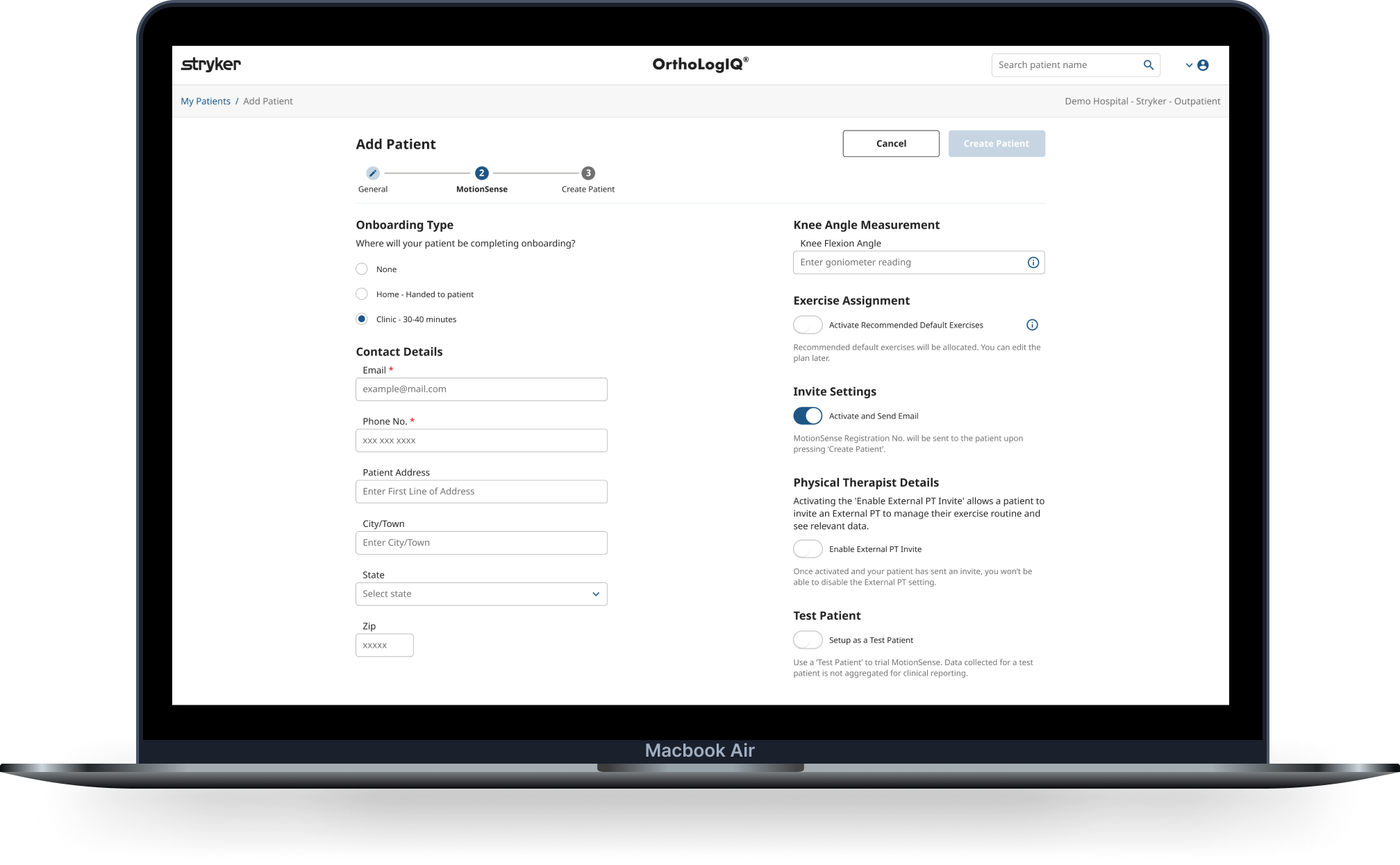
Redesigned the Add and Edit Patient flows on OrthoLogIQ, reducing clinician data entry time from 3 minutes to 1.7 minutes (43% reduction). Introduced a step-based wizard and tabbed layout to reduce cognitive load and errors, with full component documentation and QA support through to delivery.
Designed the RTM billing feature, enabling clinicians to track and bill for Medicare codes 98977, 98980 and 98981 directly within OrthoLogIQ. The feature reduced administrative burden and supported a 15% uplift in recurring revenue. When 2024 CMS rule changes redefined surgeon billing eligibility, I led a fast permissions redesign to shift billing capability to physical therapists.
Inherited and evolved the OIQ Design System and styleguide across OrthoLogIQ and MotionSense (web, iOS and Android). Introduced accessibility standards directly into the system: WCAG audits, colour contrast checks, font size optimisations and keyboard navigation patterns. Extended the system to cover new feature work and documented every component for engineering handoff.
Initiated and facilitated the ‘Hooked Workshop’ with clinical and product teams in Florida, applying Nir Eyal's habit-forming framework to the patient engagement problem on MotionSense. The session produced a prioritised list of feature changes to address long-term patient compliance.
Defined analytics event structures in Microsoft Azure to support data informed iteration across both platforms, covering page views, custom events and feature adoption tracking.
MotionSense
Designed to assist in the recovery process for patients undergoing orthopaedic knee replacement surgery.
MotionSense
Designed to assist in the recovery process for patients undergoing orthopaedic knee replacement surgery.
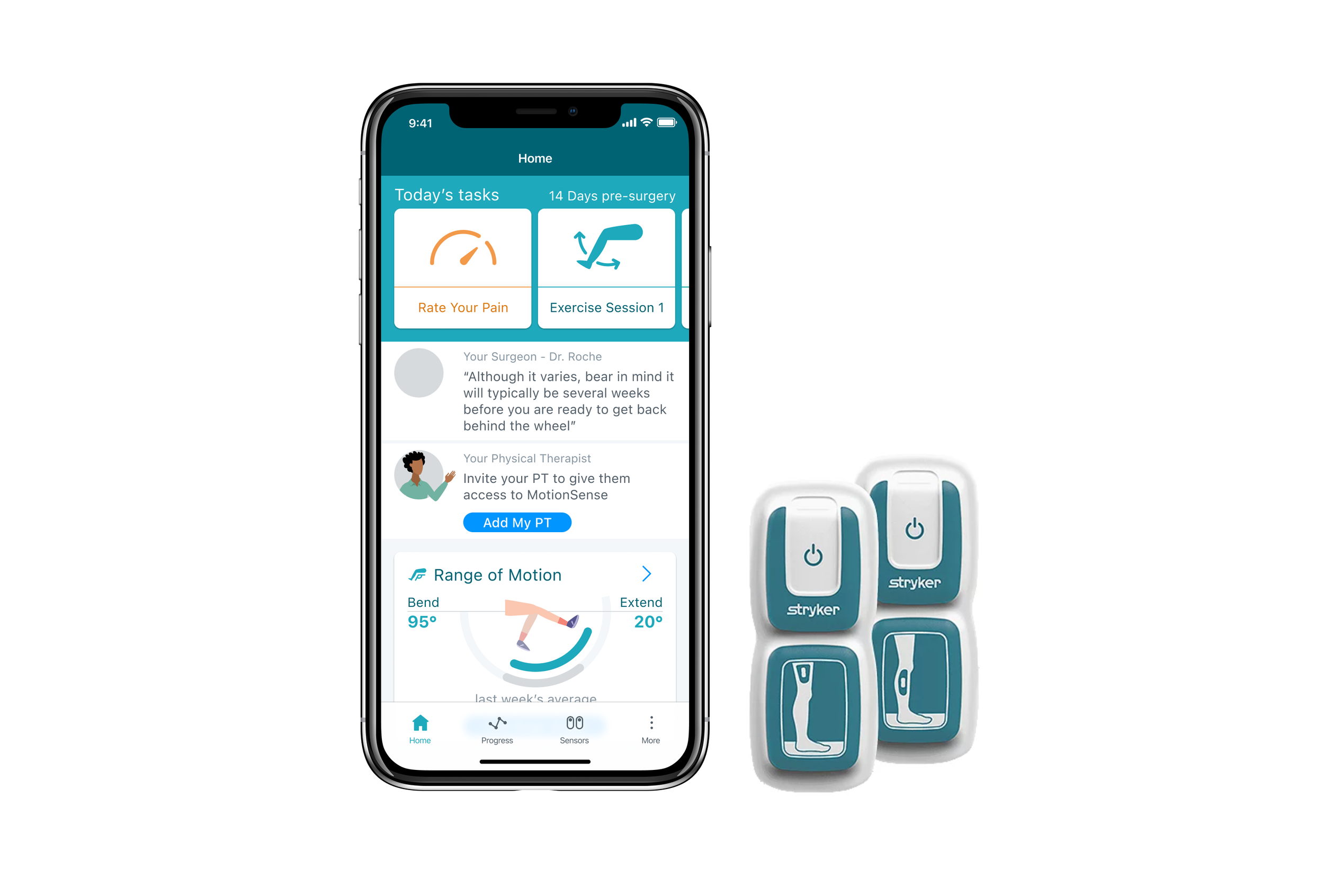
What is MotionSense?
MotionSense is a patient-facing recovery app designed for American patients to use both before and after surgery. It supports recovery by guiding patients through clinician prescribed exercises and enabling them to track key Activities of Daily Living (ADLs), which are essential for self care and maintaining independence.
The app captures important recovery metrics including Range of Motion (ROM), pain scores, step count and active time, giving patients visibility into their progress throughout rehabilitation.
MotionSense was available on both iOS and Android and connected to a wearable device worn on the patient’s leg. The wearable consisted of two sensors - one placed on the lower thigh and one on the lower leg - allowing accurate, continuous monitoring of movement during recovery.
All patient data collected via MotionSense was integrated into the clinician-facing platform OrthoLogIQ, creating a connected ecosystem that supported both patient engagement and clinical decision making.
OrthoLogIQ
Designed to help orthopaedic surgeons and clinicians monitor and manage patient outcomes.
OrthoLogIQ
Designed to help orthopaedic surgeons and clinicians monitor and manage patient outcomes.
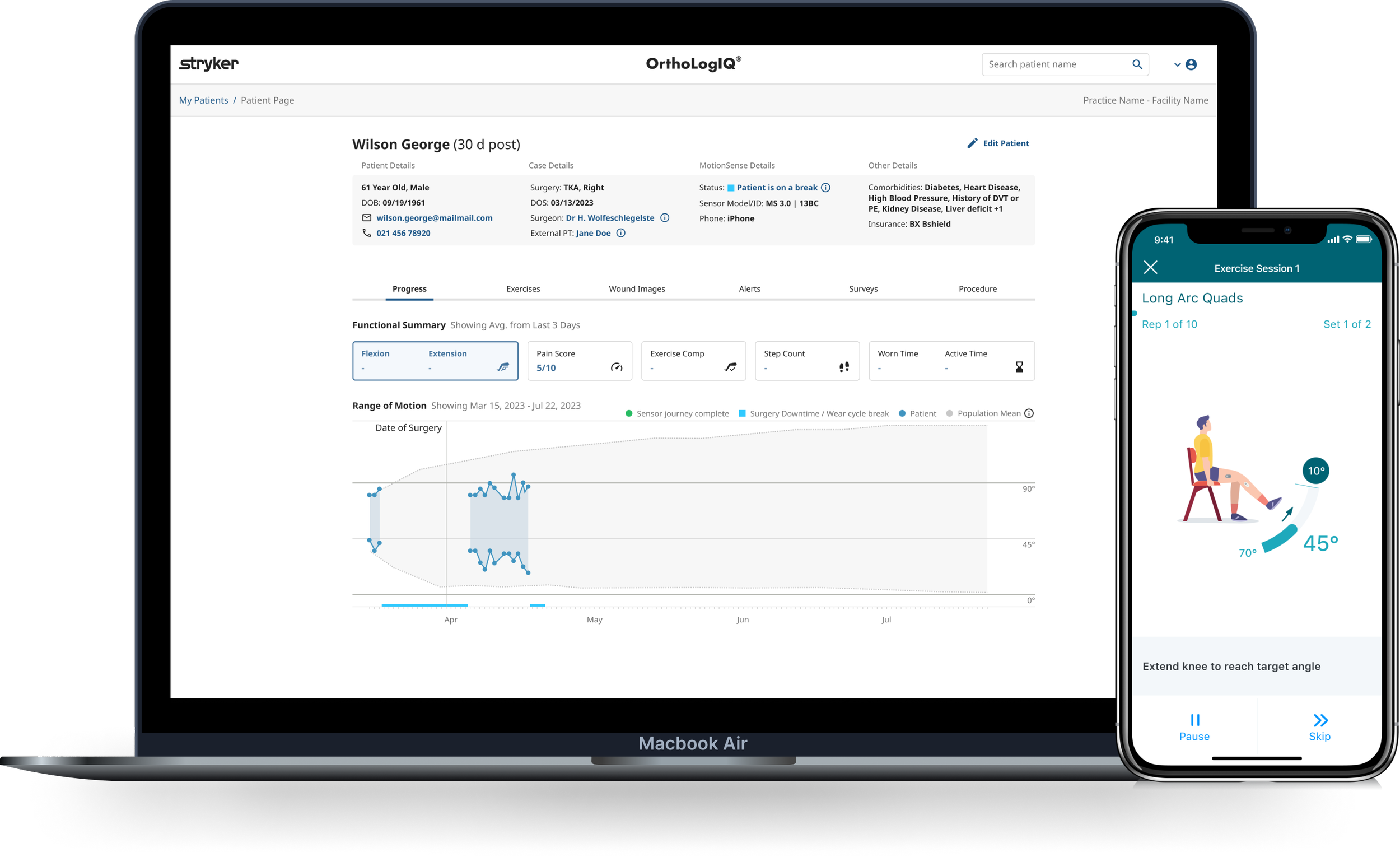
Clinician-Facing ‘Patient Page’ in OrthoLogIQ with ‘Exercise Session’ in the Patient-Facing MotionSense App
What is OrthoLogIQ?
OrthoLogIQ is a cloud-based, clinician facing platform that enables surgeons and care teams to remotely access and analyse patient recovery data captured via the MotionSense app.
The platform supports patient profile management, monitoring of key recovery metrics - including range of motion, step count, and activity levels - and the ability to adjust prescribed exercises as recovery progresses. With secure, HIPAA-compliant access, OrthoLogIQ enables more personalised, data informed care, helping teams intervene earlier, improve patient outcomes and reduce overall costs. Built in alerts notify care teams when patient progress falls outside expected thresholds.
I primarily worked on the OrthoLogIQ SaaS platform, focusing on optimising the experience for iPad and desktop, which were the primary devices used by surgeons and care teams in clinical settings.
Physical Therapist Access: Bridging the Gap Between Patients and Therapists
Physical Therapist Access: Bridging the Gap Between Patients and Therapists
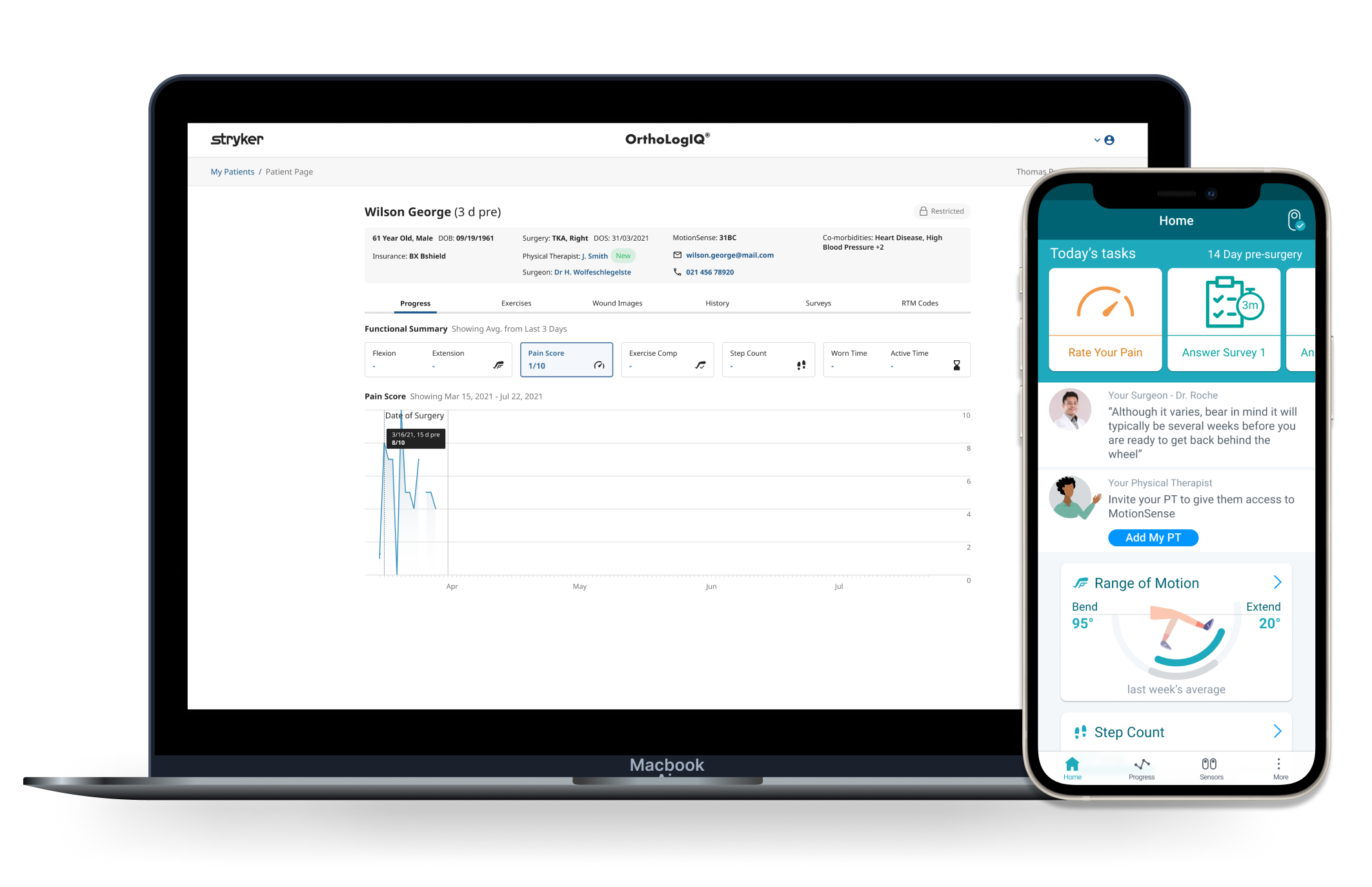
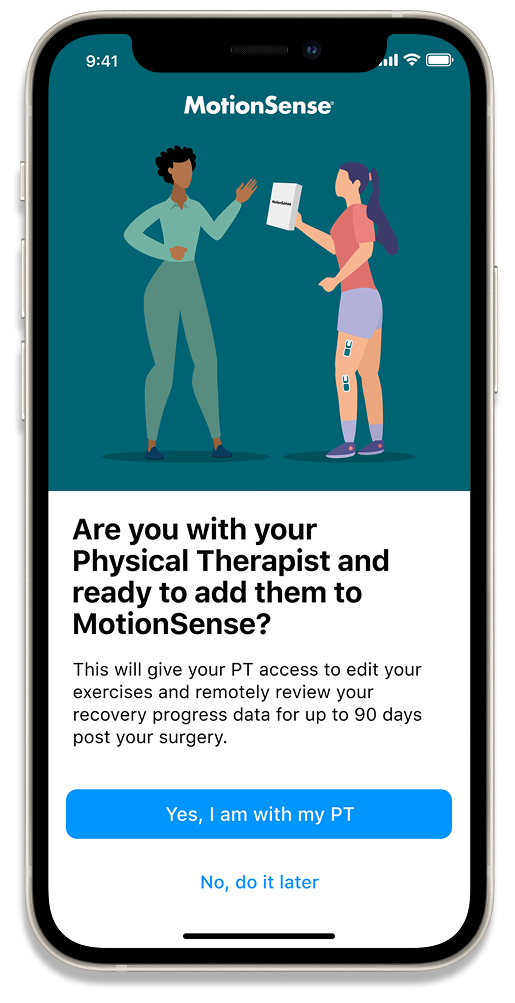
As a Senior Staff UX/UI Designer at Stryker, I led the design of a major platform expansion enabling external Physical Therapists to access OrthoLogIQ and MotionSense. I owned the permissions model, invitation and onboarding flows, and cross platform workflow definition end to end - allowing PTs to support patients remotely, improving recovery outcomes while reducing clinician workload.
Impact & Key Results
Patients were 54% more likely to remain active with their exercises after 30 days when PTs updated recovery plans
👥 I enabled secure, patient-invited PT access across both platforms for the first time.
🔄 I reduced surgeon and clinician administrative workload by enabling shared care responsibilities between surgeons and PTs
🔐 I designed a privacy first access model giving patients control over PT visibility and permissions
📈 I delivered a successful MVP establishing the foundation for future PT-facing features and billing workflows
🧩 I designed and documented PT Access components within the OIQ Design System, maintaining consistency across the platform and ensuring engineering had a clear, self-explaining reference for build.
Challenge
Patient compliance was a persistent challenge… many didn’t stick to their recovery plans, especially once they left the clinic setting.
Clinicians were too busy to update exercise routines regularly, and independent PTs had no access to the platform. Without ongoing guidance from PTs (who were often the most hands on support in recovery), patients were left disengaged - creating a critical care gap that impacted long term outcomes.
This project involved introducing a new user type (external PTs) into a clinically sensitive system, requiring careful consideration of privacy, permissions and clinician oversight.
Solution
I designed a secure, patient driven invitation flow, allowing MotionSense users to invite their PTs to OrthoLogIQ. Once verified, PTs could view recovery data, edit exercise plans, and track progress - while clinicians retained data oversight and access control.
The experience was built with scalability and data privacy in mind, aligning design, dev and regulatory constraints over 9 agile sprints.
My Role: Senior Staff UX/UI Designer
I owned the strategic UX direction for PT Access, including defining the highest risk user model, shaping the permissions architecture, and driving MVP scope decisions.
Team Composition: Remote Developers, User Researcher, Marketing, Product Managers and QA/Test Engineers.
Timeline: January 2023 - May 2023: Approx 4.5 months (9 sprints)
From Clutter to Clarity: Reducing Clinician Task Time by 43%
Redesigned the patient entry experience on Stryker’s OrthoLogIQ platform to reduce task time and data entry errors.
Clinician Platform · Medical Devices · UX/UI · Stryker
From Clutter to Clarity: Reducing Clinician Task Time by 43%
Redesigned the patient entry experience on Stryker’s OrthoLogIQ platform to reduce task time and data entry errors.
Clinician Platform · Medical Devices · UX/UI · Stryker
My Role: Senior Staff UX/UI Designer
Team: Remote developers, Product Managers, Marketing, QA/Test Engineers
Timeline: August to October 2023, 2 months, 4 sprints
As a Senior UX/UI Designer at OrthoLogIQ, I redesigned the ‘Add Patient’ and ‘Edit Patient’ experiences to reduce cognitive load, improve accuracy, and streamline workflows for busy clinicians.
The original layout was cluttered, hard to navigate and time consuming…
I introduced a structured, step based flow for adding patients and a simplified tabbed layout for editing, making data entry faster, clearer and easier - even under time pressure.
Ultimately, Less time on admin means more time with patients.
Impact & Key Results
🕒 43% Time Reduction – Reduced clinician patient data entry time from 3 minutes to 1.7 minutes, helping clinicians complete entries more quickly, especially under time pressure.
✅ Fewer Data Entry Errors – Clearer UI and a structured step by step flow reduced common input mistakes and rework
👍 Higher Clinician Satisfaction – Clinicians found the platform easier to navigate and the summary confirmation step improved confidence before submission
♿ Improved Accessibility - WCAG compliant colour contrast, keyboard navigation, cognitive load reduction by design, and accessibility carried through to build via full component documentation.
Challenges
Healthcare professionals (HCPs), including surgeons and clinicians, face busy schedules, limited resources and staff, and high pressure environments. Within OrthoLogIQ, I identified several areas where information overload led to confusion and inefficiency.
The existing Add Patient screen crammed all fields into a three-column single-page layout, requiring excessive scrolling and making it easy to miss or mis-enter data under pressure. Clinicians reported cognitive overload and frustration. The Edit Patient screen replicated the same layout despite being a fundamentally different task: targeted correction, not guided data entry.
Key pain points identified (all contributing to cognitive overload and user errors):
Excessive scrolling and difficulty locating key details
A high risk of entry errors under time pressure
Poor accessibility across devices
A frustrating and inefficient workflow
My Role: Senior Staff UX/UI Designer
Team Composition: Remote Developers, Marketing, Product Managers and QA/Test Engineers.
Timeline: August - October 2023: approx. 2 months (4 Sprints)
What I Did
I audited the existing screens and ran live video observations (usability testing) to understand real workflow friction. I explored multiple layout structures (two-step, three-step, tabbed) and built interactive prototypes including unhappy paths to stress test the flows before development.
For Add Patient I introduced a three-step wizard: General, MotionSense setup, and a summary confirmation screen. The final step evolved from an existing success modal that was causing confusion, repurposed into a dedicated review stage that improved accuracy and confidence at the point of submission.
For Edit Patient I moved to a tabbed layout. Editing is a targeted task and doesn't benefit from guided sequencing. Tabs gave clinicians direct access to what they needed without forcing them through steps they didn't.
I aligned designs to Angular Material components early to reduce build complexity, documented all component states and interaction specs directly in Figma, defined custom Azure analytics events, and supported QA through to delivery.
Facilitating the ‘Hooked’ Workshop: Crafting Habit-Forming Experiences
Facilitating the ‘Hooked’ Workshop: Crafting Habit-Forming Experiences
The Hooked Workshop
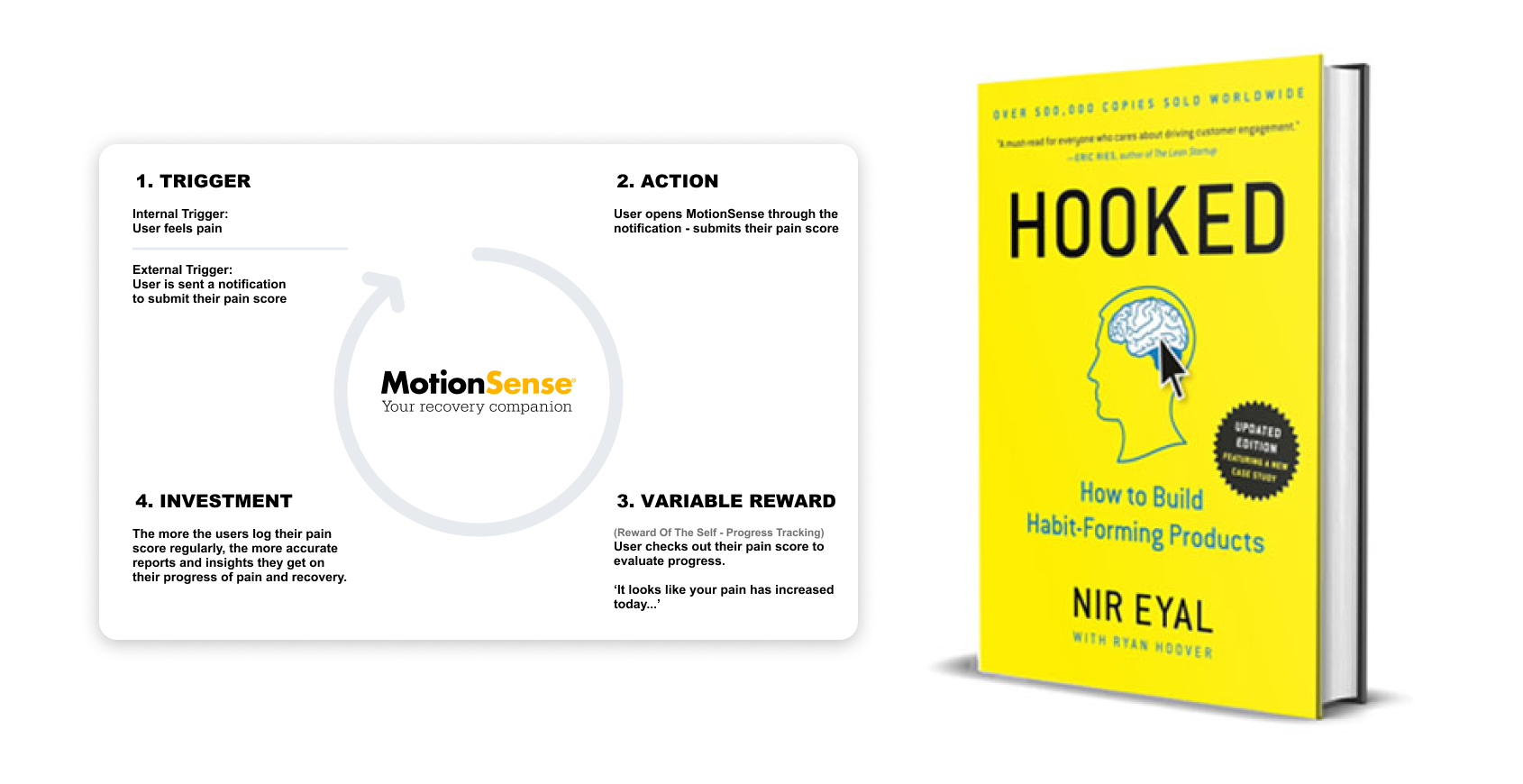
At Stryker, I initiated and facilitated a “Hooked” workshop to explore how we could apply Nir Eyal’s habit forming framework to enhance user engagement and retention.
The Hooked model, focused on four key phases - trigger, action, variable reward and investment - guided our approach to designing products that foster lasting user habits.
The workshop shifted our team’s perspective toward a more human centered approach, addressing a key challenge: low patient compliance within the app.
Our goal was to create a product that users instinctively turn to during their knee recovery, making it both useful and engaging.
As a result, we developed a clearer understanding of the user journey and prioritised a list of feature changes aligned with the Hooked principles, aimed at driving long term user satisfaction and product growth.