
Purpose of the Hooked Workshop
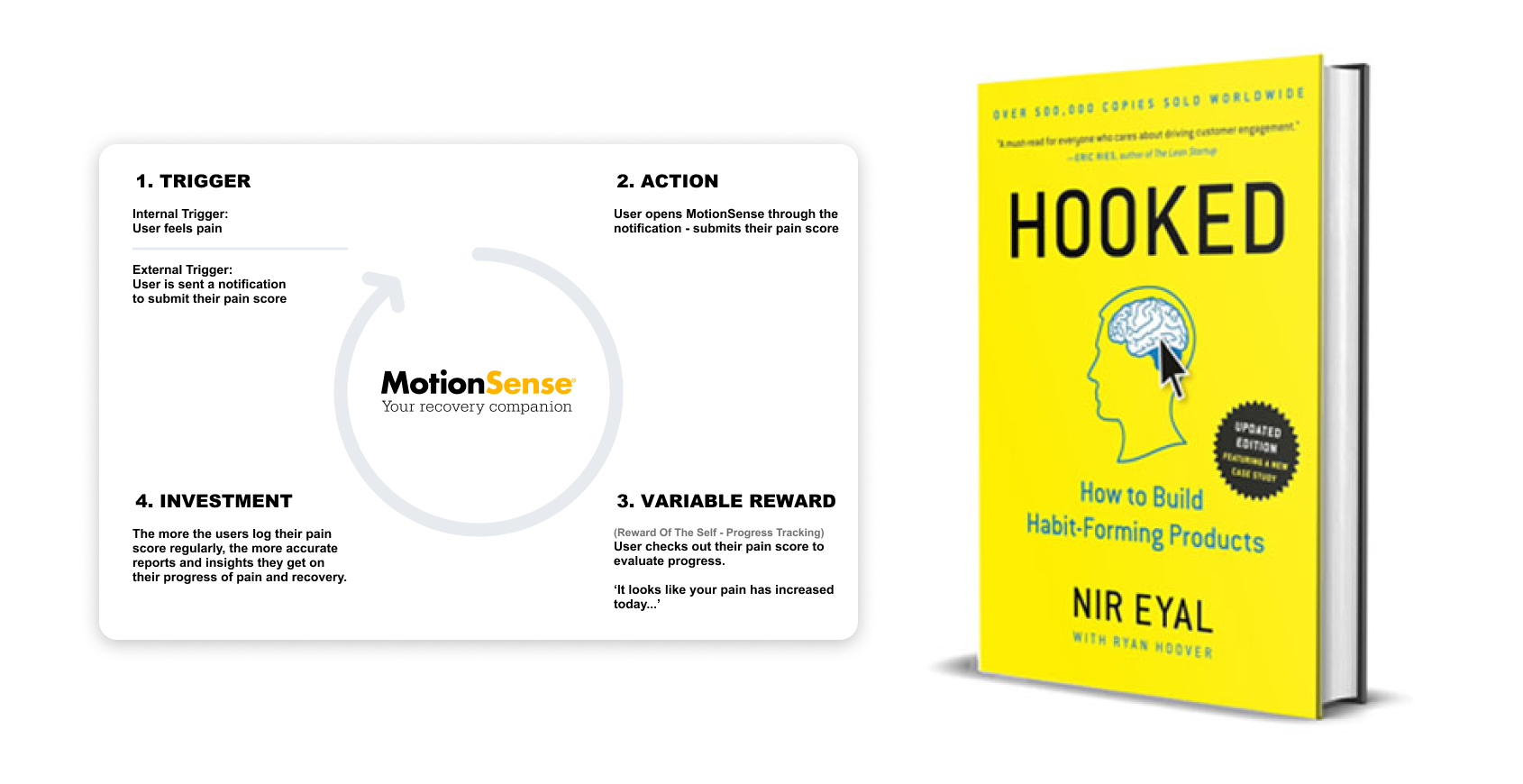
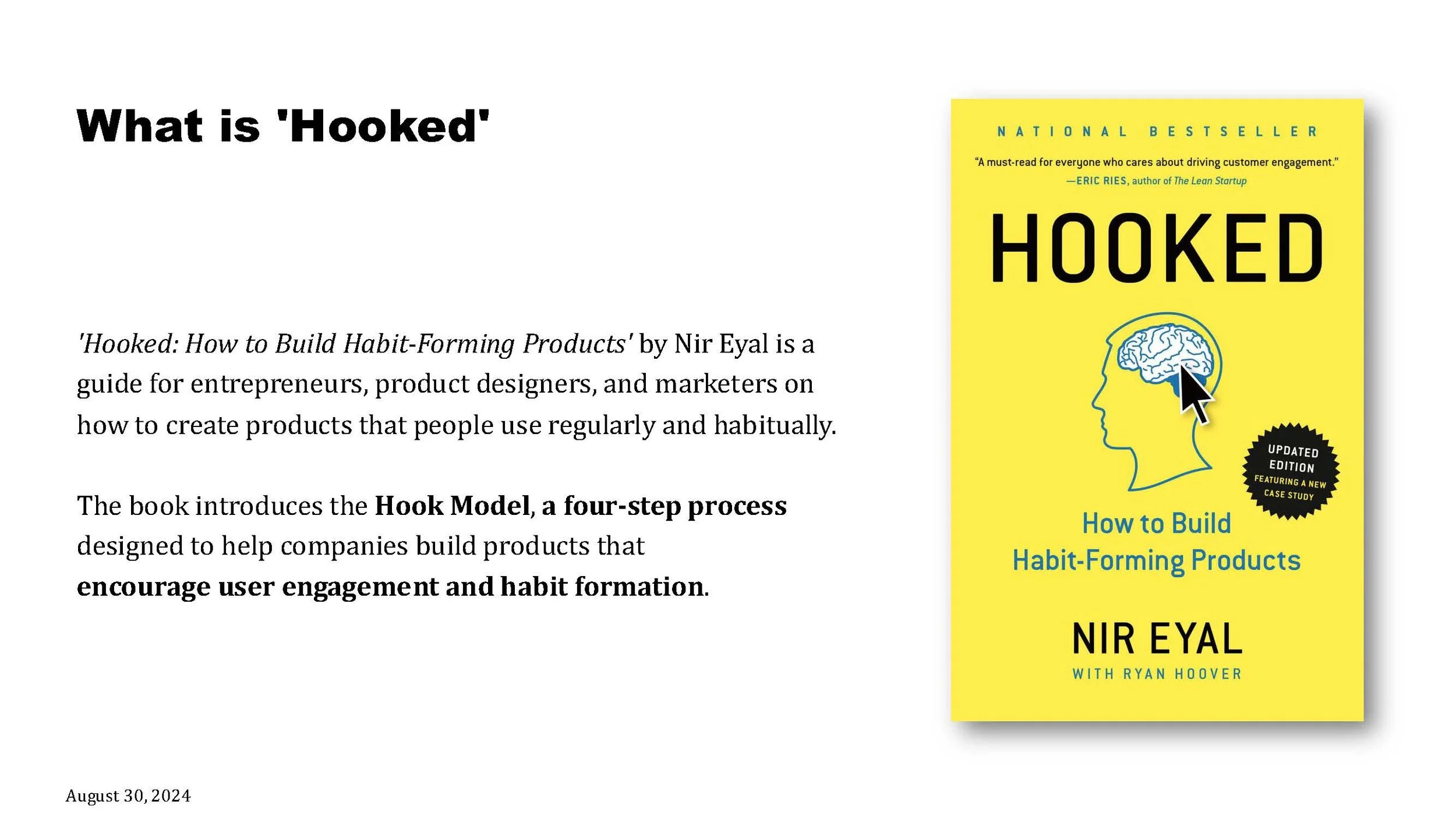
While at Stryker, I initiated and facilitated a “Hooked” workshop with our team to explore how we could apply the principles of habit forming products to enhance user engagement and retention. The workshop was based on Nir Eyal’s “Hooked” framework, a widely recognised model for designing products that foster strong, lasting user habits.
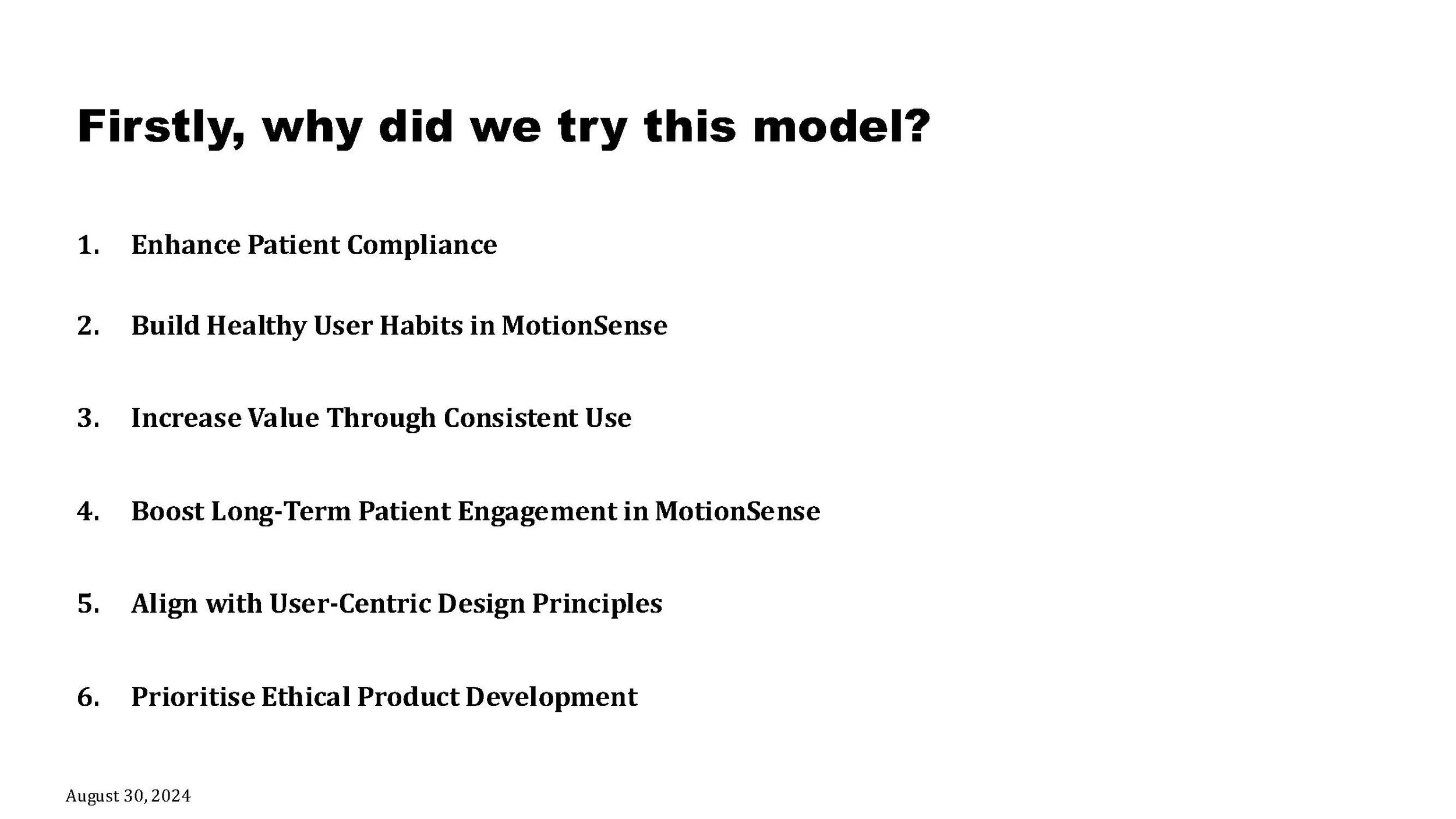
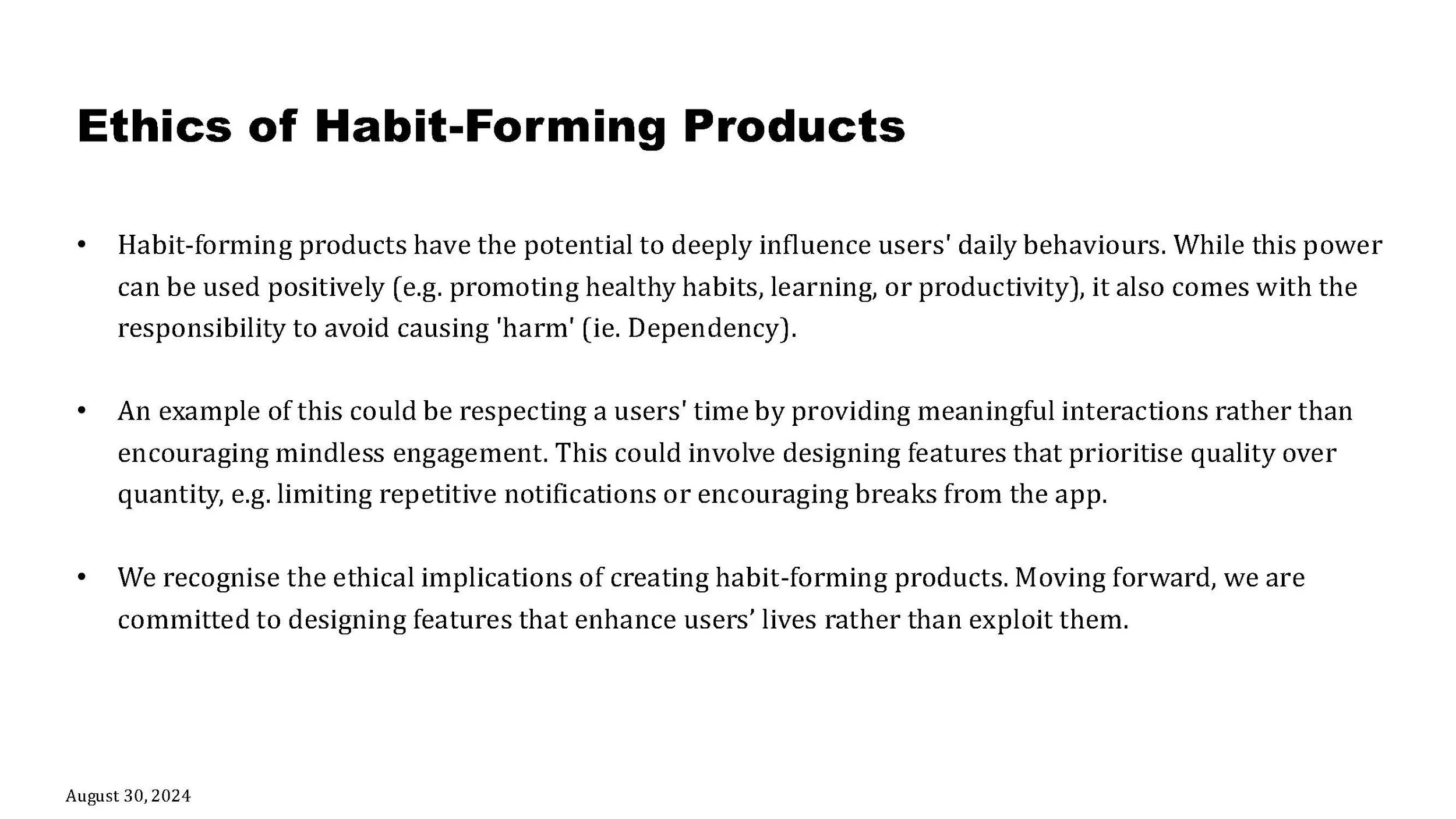
My primary aim was to encourage the team to think from a human centred perspective rather than a purely business centric one. We also focused on increasing user engagement as we identified that patient compliance was low in the app - an ongoing challenge in our industry. Our goal was to create a product that users find not only useful but also instinctively turn to as a natural part of their knee recovery journey.
Overview of the Hooked Workshop:
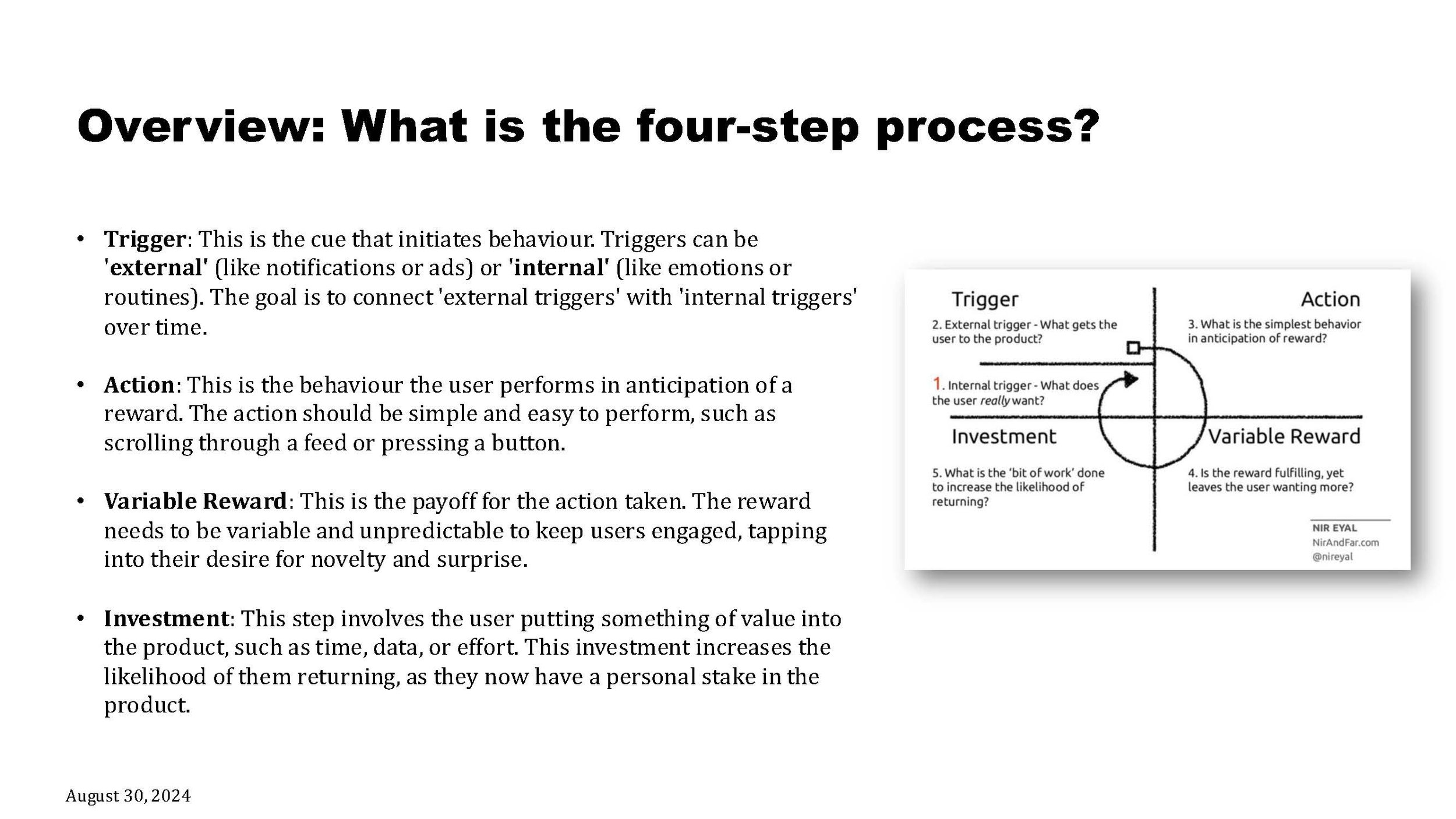
The Hooked model focuses on four key phases:
trigger
Action
variable reward
investment
These four key phases work together to form user habits. To fully cover the content and ensure thorough collaboration, I conducted a series of four 1 hour workshops. This structure allowed me to present the material effectively while giving the team ample time to collaborate on answering the workshop questions. During the sessions, we analysed our product through the lens of these four phases to identify opportunities to better capture user attention and encourage ongoing engagement.
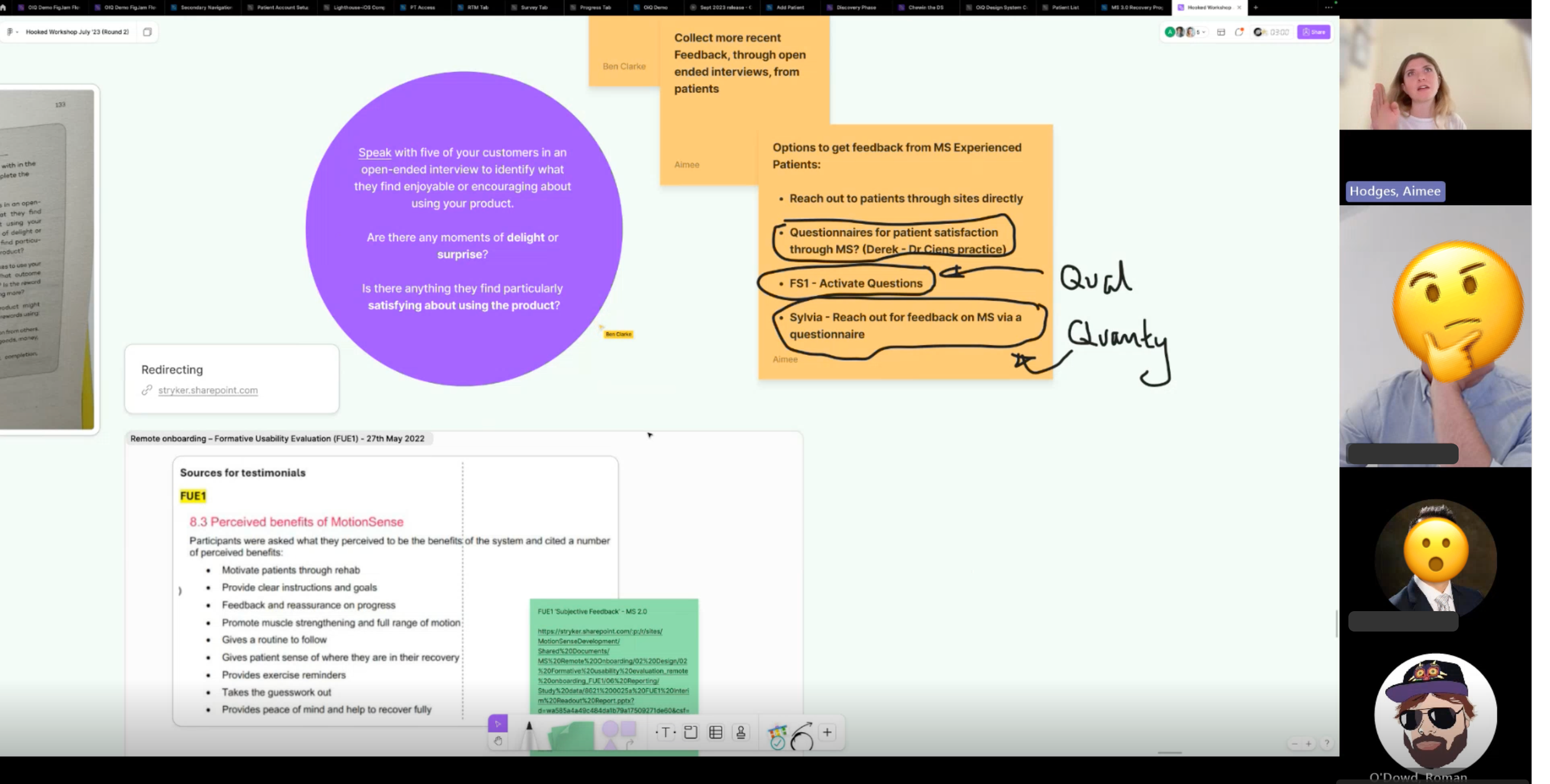
Workshop Participants: The workshop was attended by the Marketing Manager, Design Manager, UX/UI Designer, Usability Engineer, Director of Product Development and Software Development Manager.
Key Benefits of the Hooked Model for Enhancing User Engagement:
By applying the Hooked model, we aimed to:
• Improve user engagement by understanding what triggers bring users back.
• Simplify user actions to increase usability and conversion rates.
• Introduce variable rewards to keep the experience exciting and unpredictable.
• Foster user investment to deepen commitment and reduce churn.
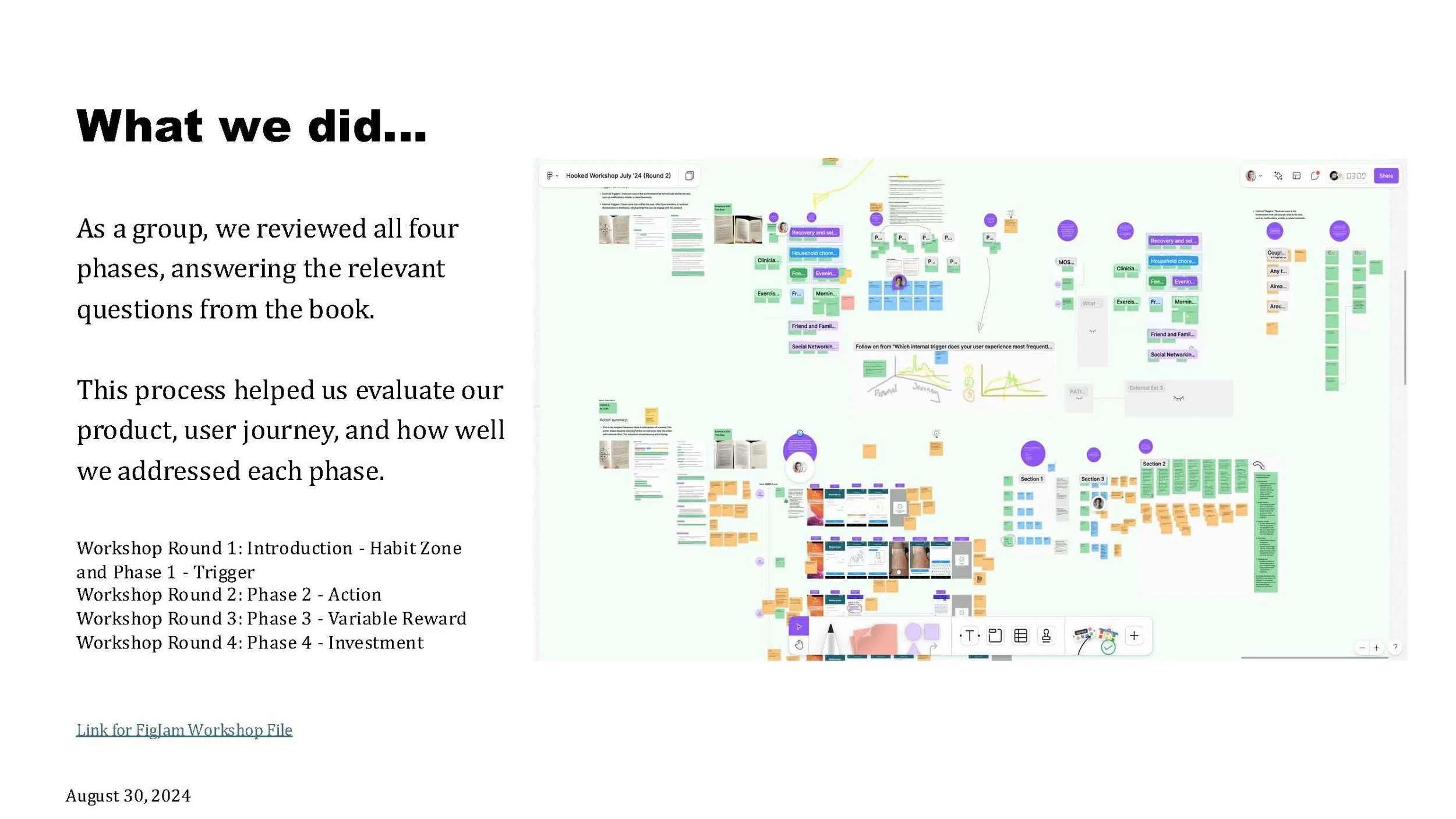
Facilitating the Workshop with FigJam:
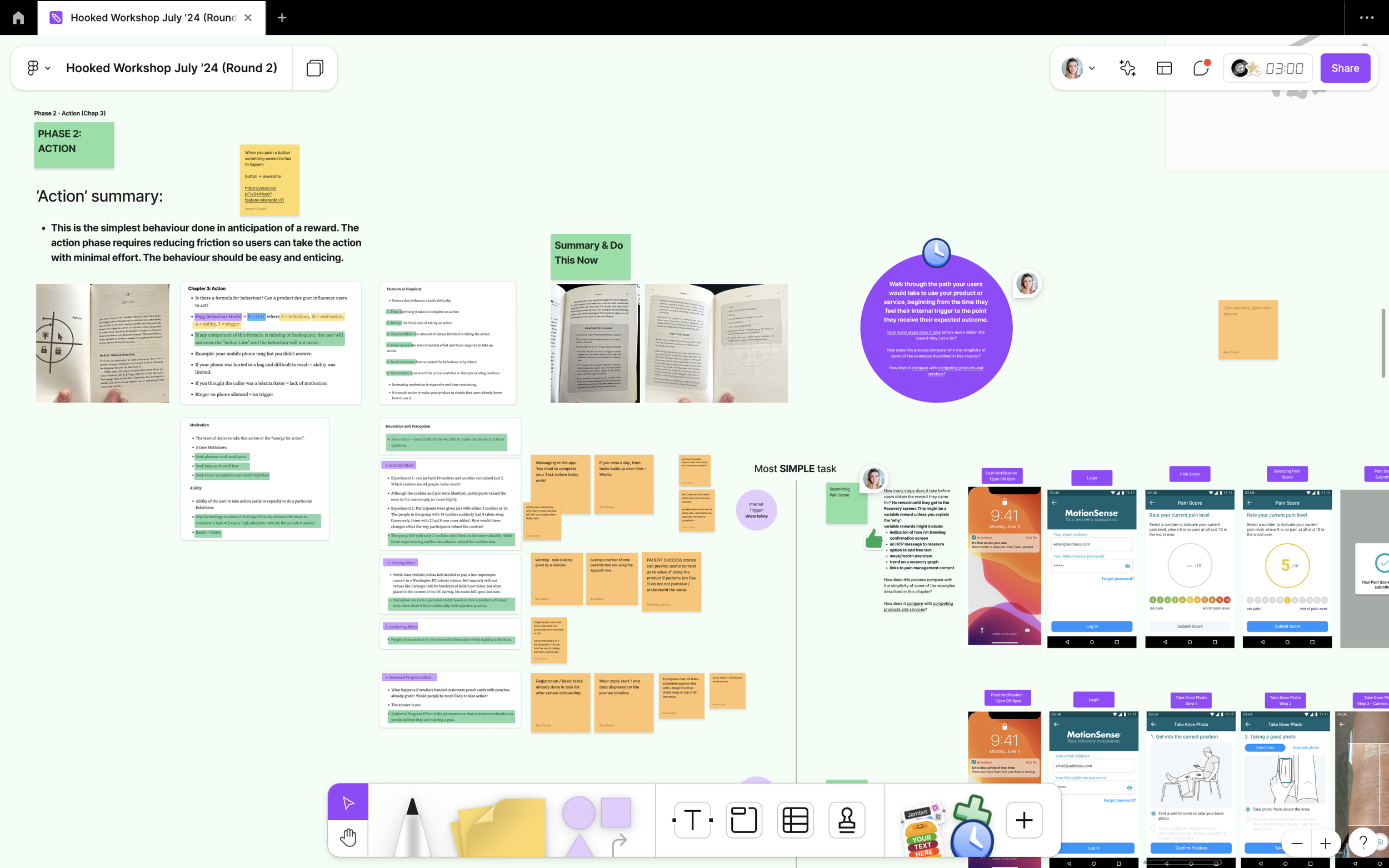
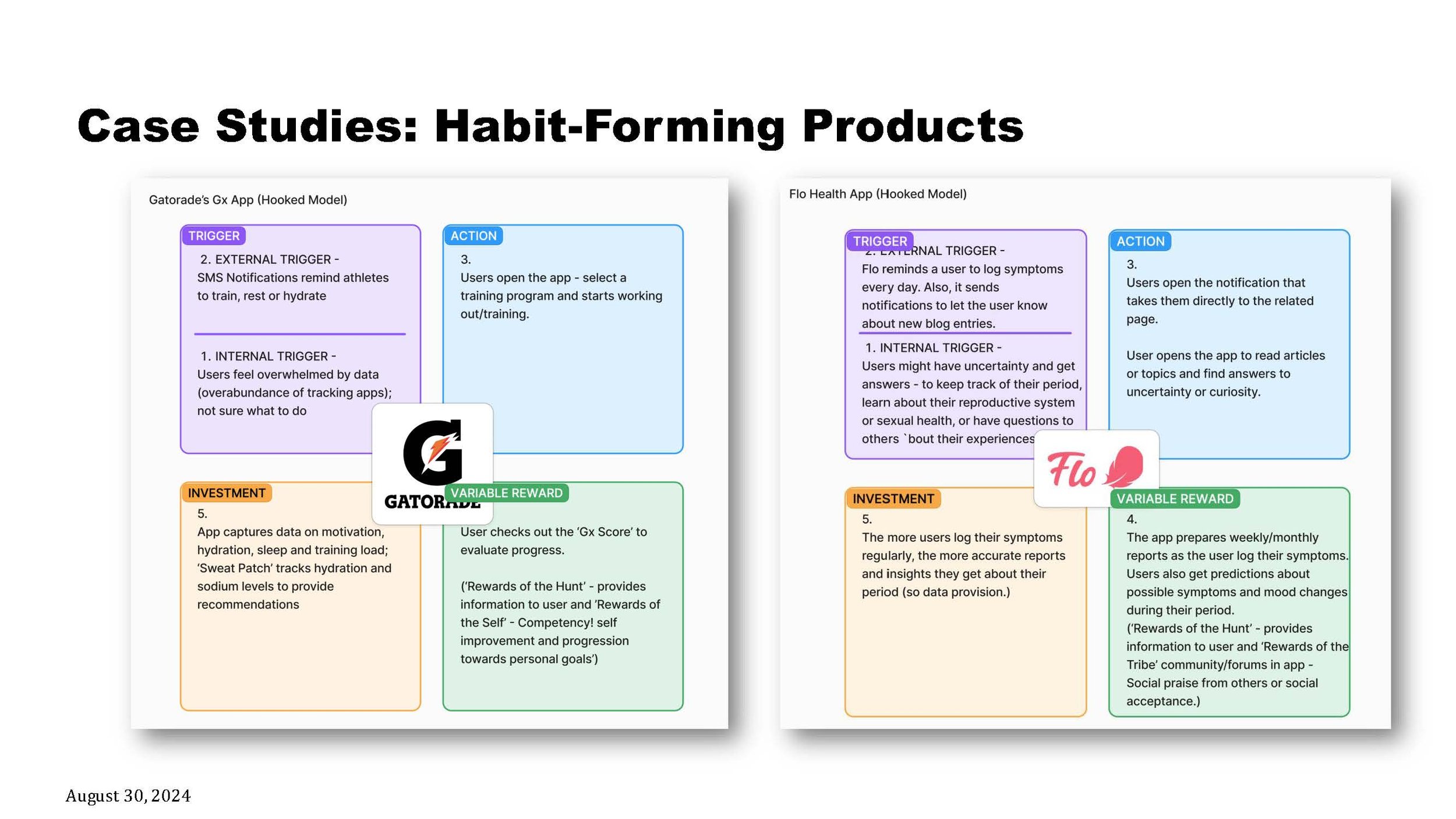
We conducted the workshop on FigJam, a collaborative online whiteboard tool that allowed myself and the team to explore the Hooked model’s four phases - trigger, action, variable reward and investment - interactively.
FigJam enabled us to brainstorm ideas, organise insights, and prioritise actions visually and in real time, fostering dynamic participation from all team members. This approach helped us capture diverse perspectives efficiently, align on key objectives, and generate actionable steps to enhance user engagement.
Workshop Outcomes:
Our discussions led to a clearer understanding of the user journey and a prioritised list of changes and new features designed to align with these principles. These changes aim to make our product more engaging, enhance user satisfaction, and drive long term growth.
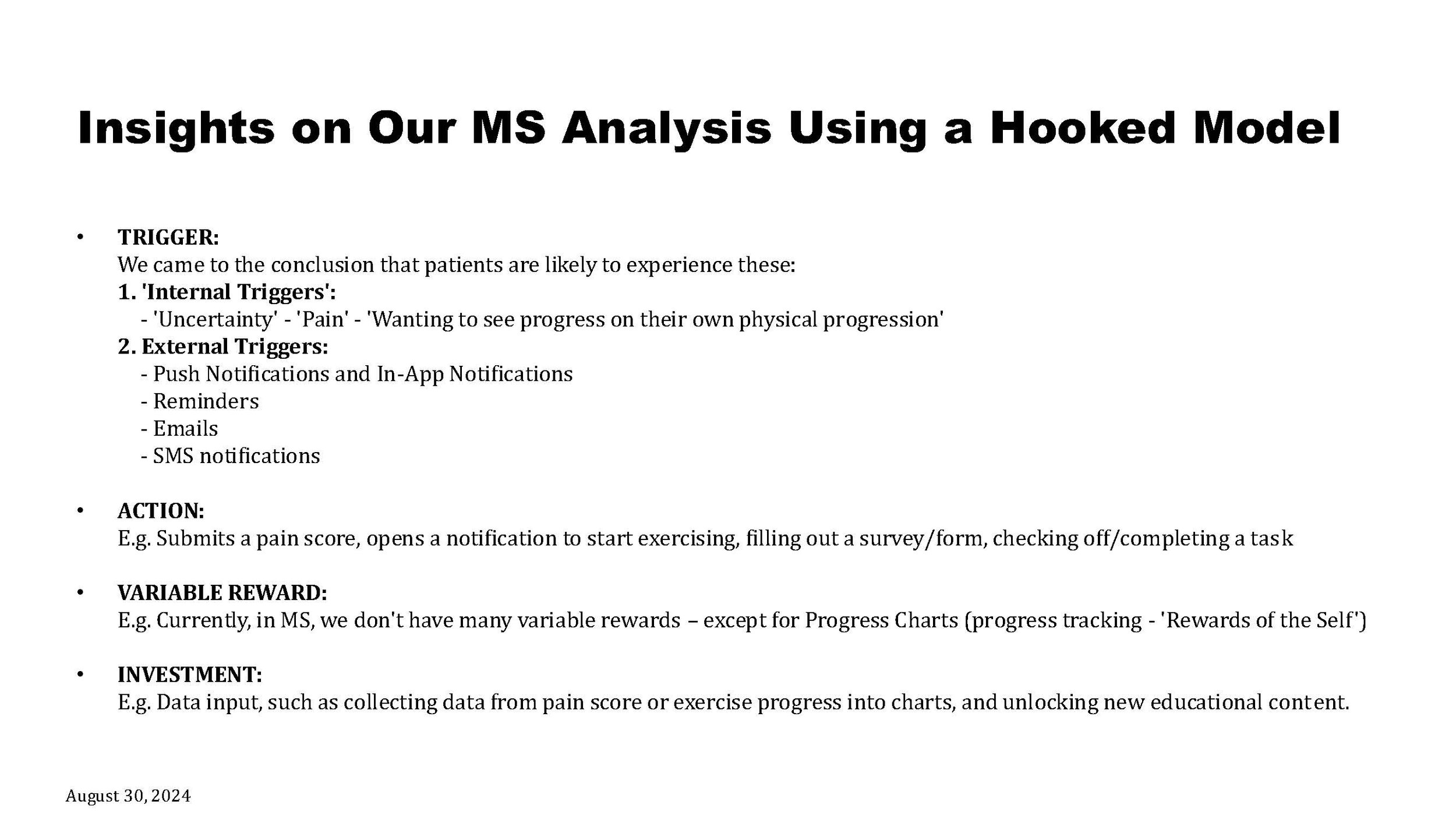
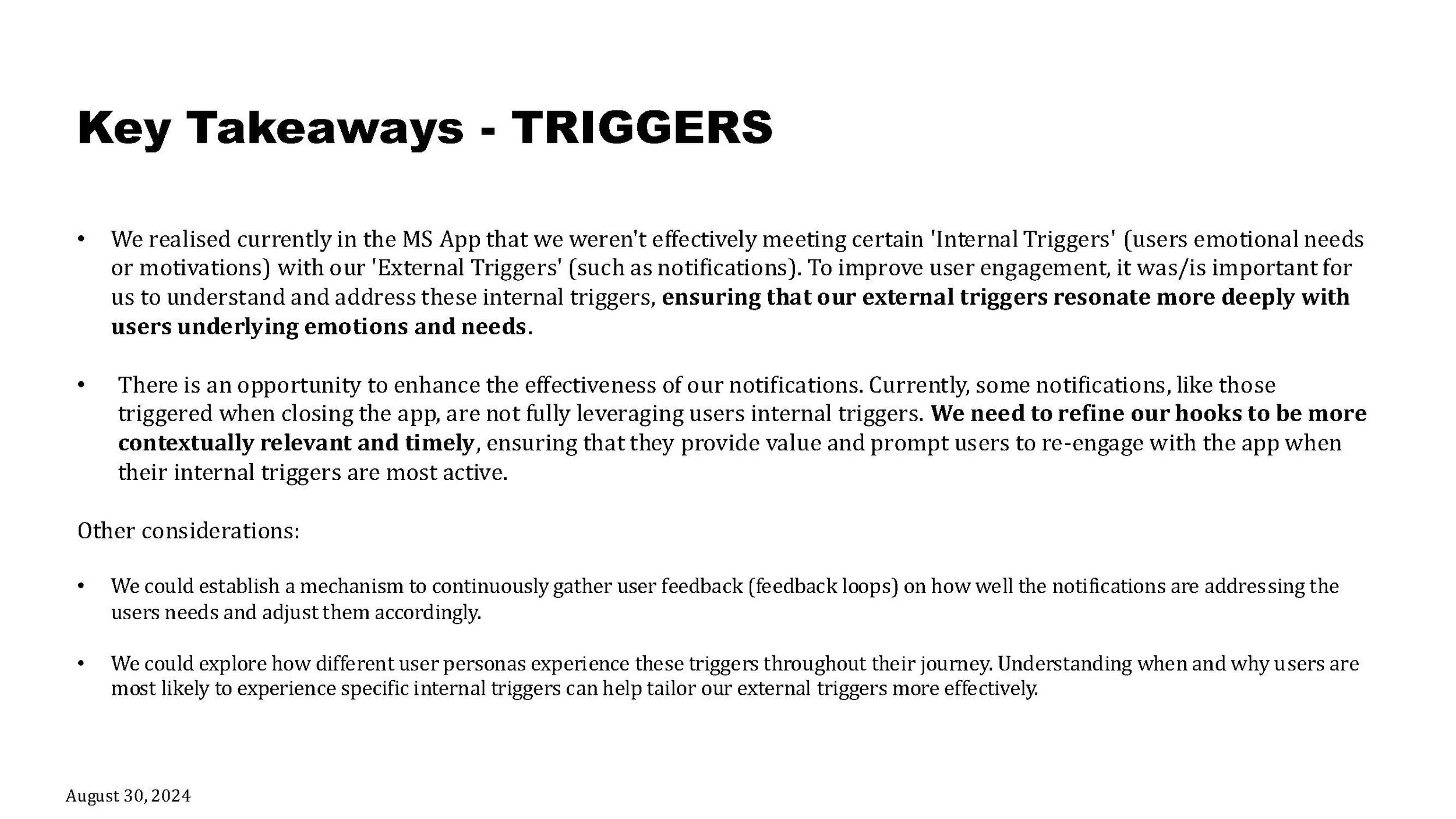
• Trigger: We realised that the MotionSense App was not effectively addressing users’ ‘internal triggers’ (such as emotions and routines) as well as it could. We needed to ensure that our ‘external triggers’ (such as notifications or alerts on the phone) more deeply resonated with the underlying emotions and needs of our users, such as feelings of ‘pain’ or ‘uncertainty’ throughout their knee recovery journey.
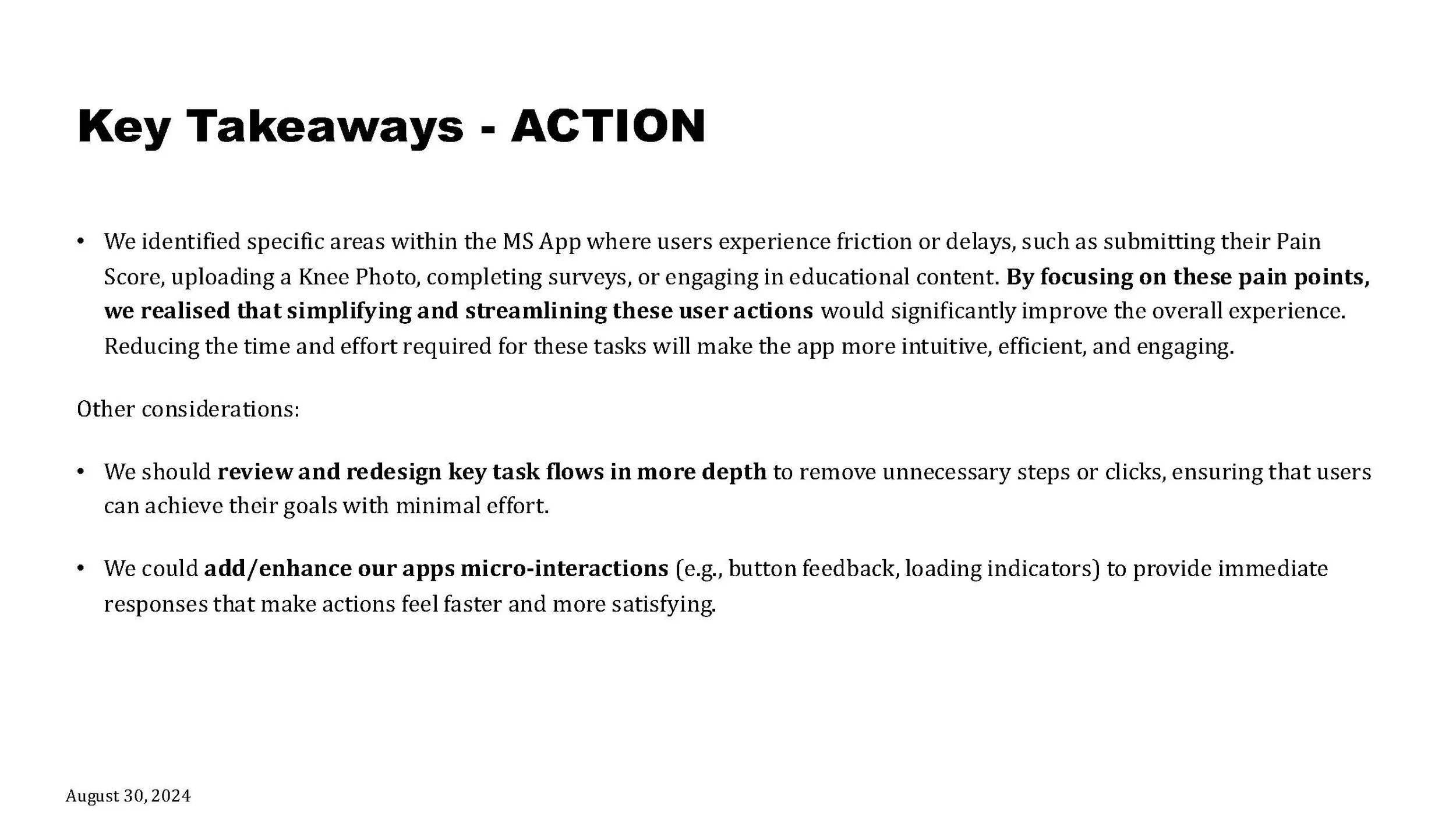
• Action: We identified areas in the app related to ‘action’ (the behaviour a user performs in anticipation of a reward) where users might encounter friction or delays. We recognised opportunities to simplify and streamline these actions within the MotionSense app, such as when users submit knee photos, complete surveys, or engage with educational content. We also saw the need to review and redesign key task flows more thoroughly to remove unnecessary steps or clicks for users.
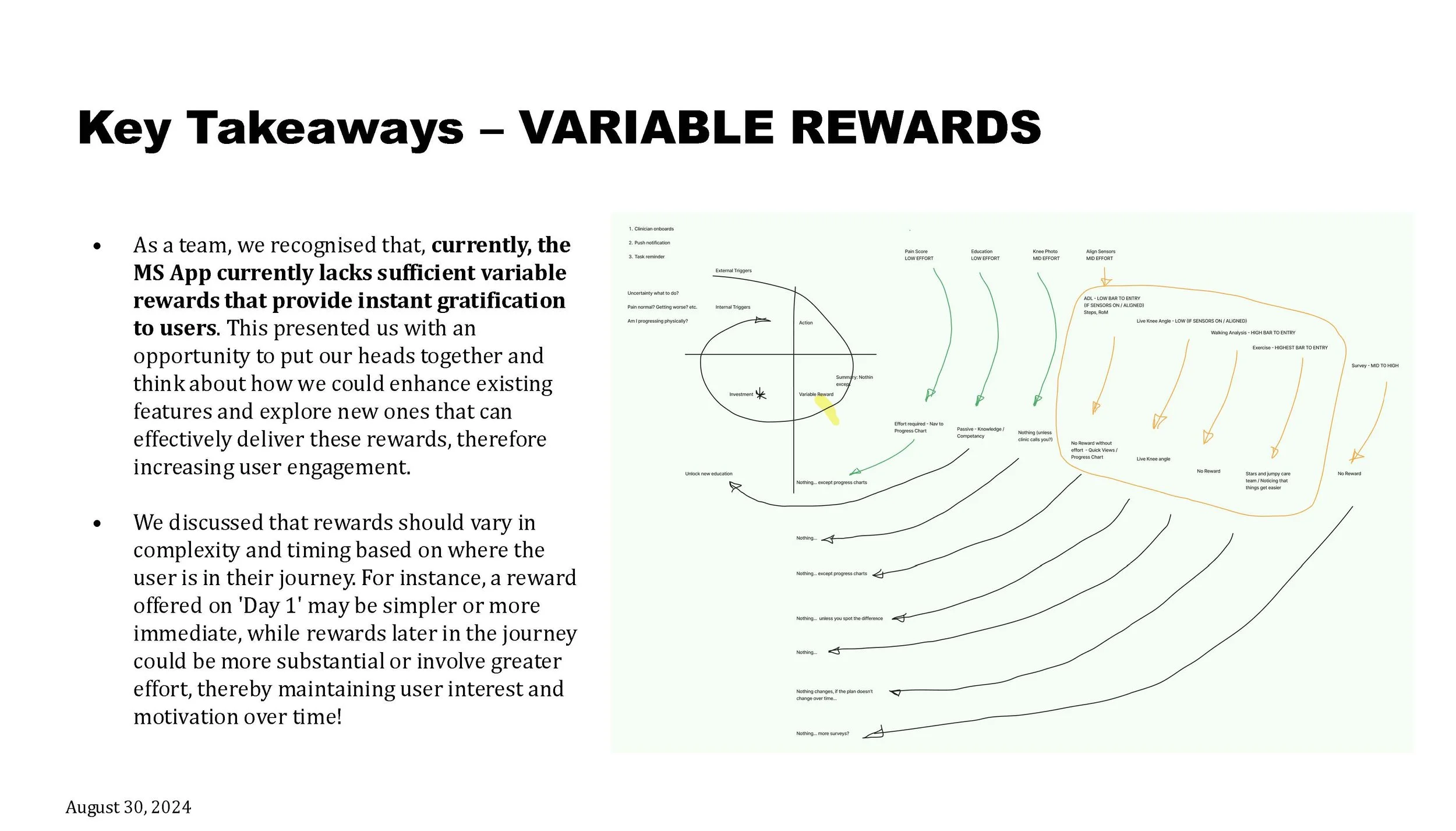
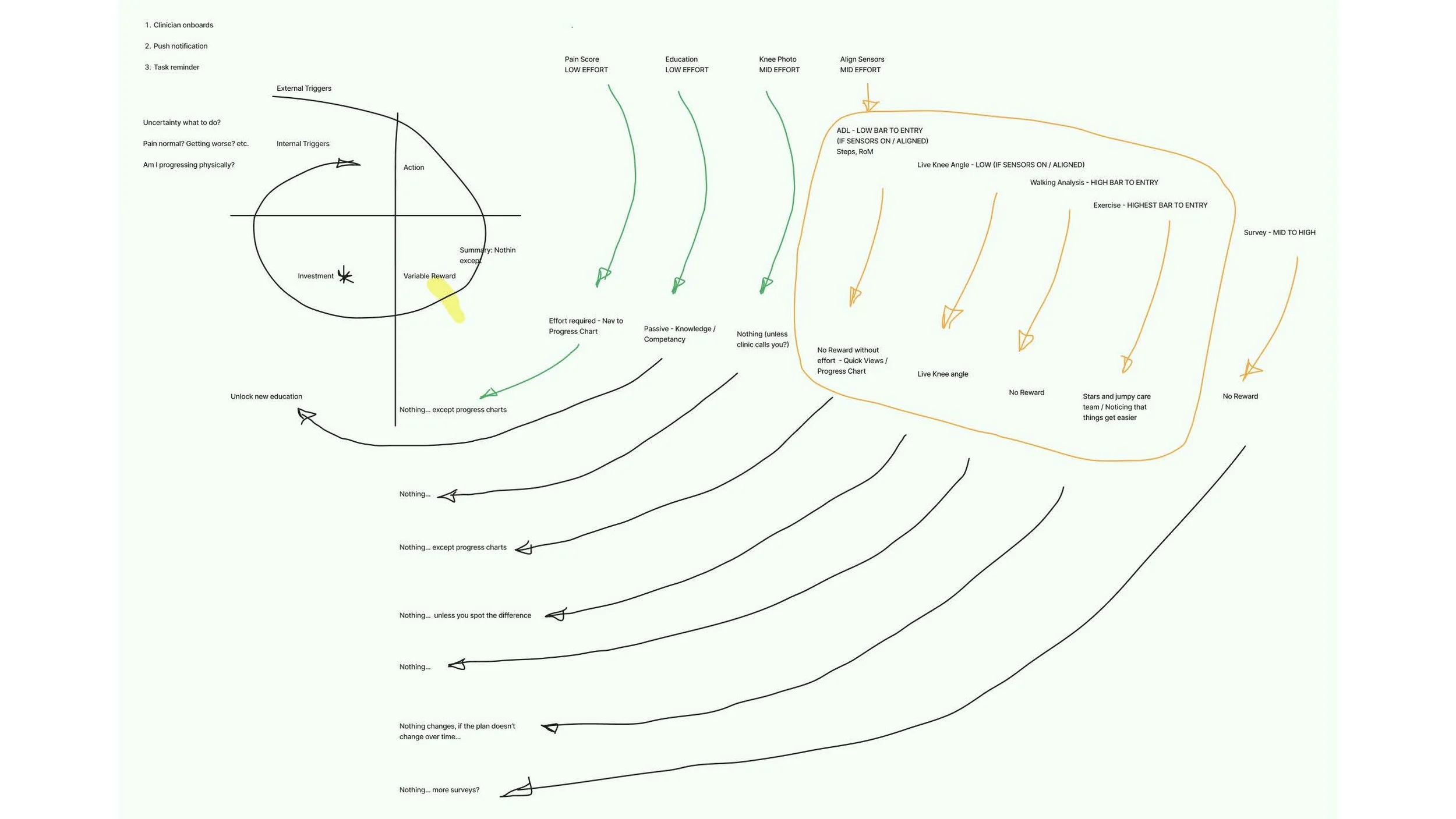
• Variable Reward: We found that the MotionSense app did not effectively provide ‘variable rewards’ (unpredictable and engaging outcomes), which failed to offer users instant gratification. We determined that the rewards needed to vary in complexity and timing, depending on where the user was in their recovery journey.
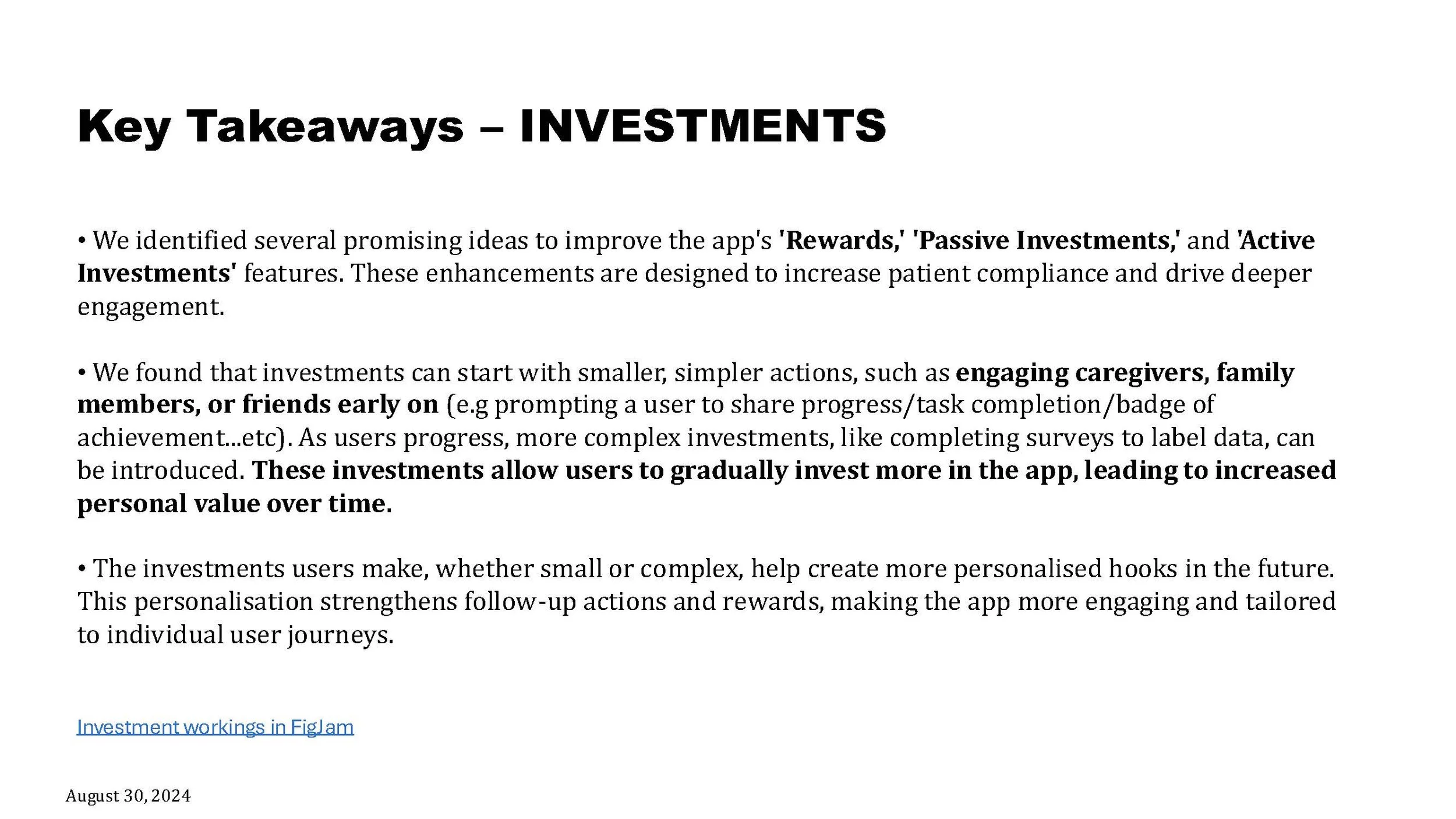
• Investment: Finally, we recognised that our product did not adequately support the ‘investment’ phase - where users contribute something of value to the product. We identified opportunities to introduce features that allow patients to engage their caregivers, family members, or peers with their recovery progress. Strengthening this aspect could increase patient compliance and foster deeper engagement, as users would gain a greater sense of value and reward from their interactions.
Workshop Summary: Presentation to the Group
Results and Next Steps:
The workshop fostered a more unified understanding among our team of user centred design principles, aligning everyone around the importance of creating products that truly resonate with our users’ needs and experiences. By collaboratively exploring the “Hooked” model, we deepened our appreciation for the emotional and behavioural drivers that influence user engagement.
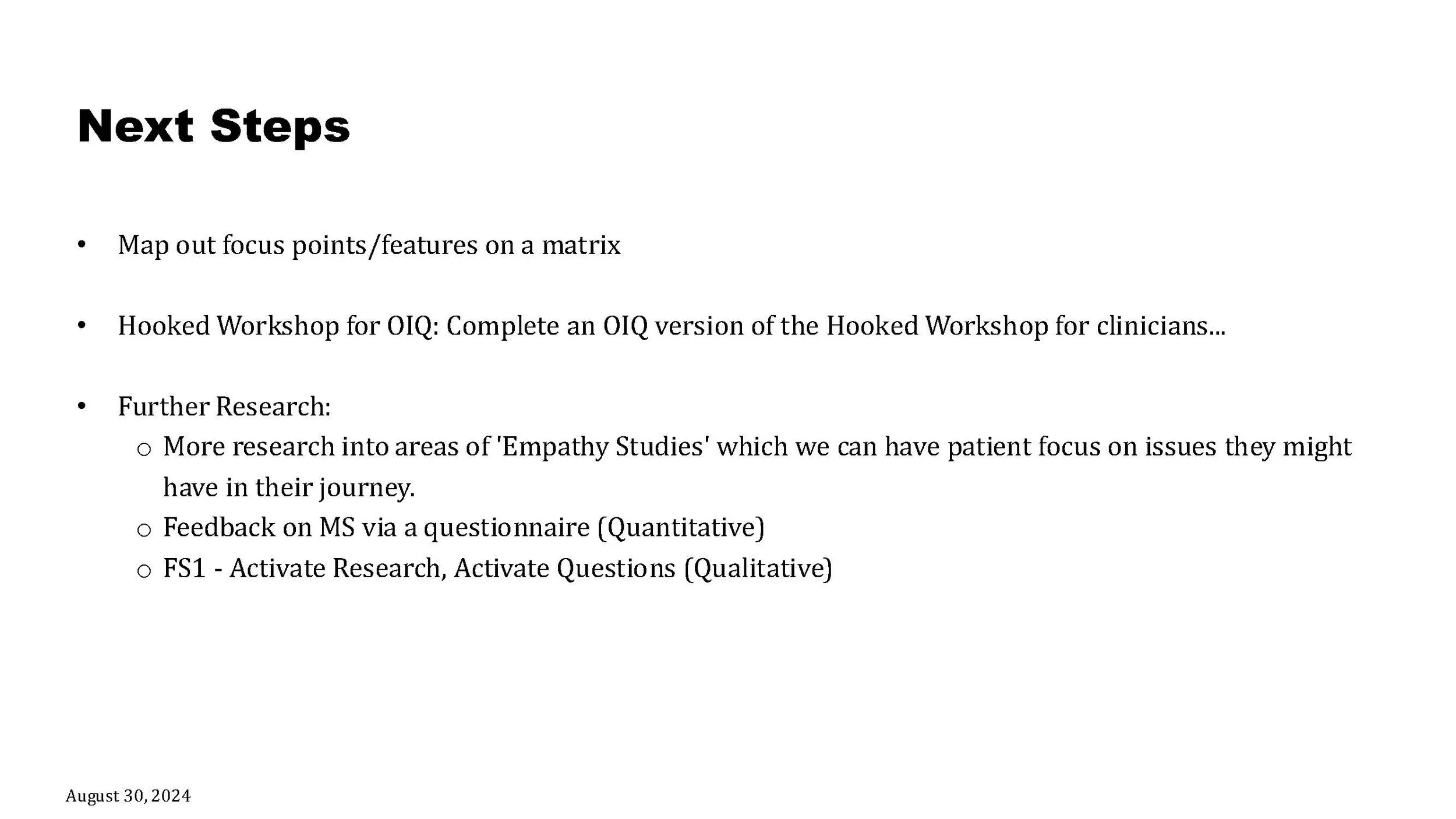
Moving forward, I planned to prioritise our brainstorming outcomes with key stakeholders, focusing on identifying and refining the most impactful features to explore further. I aimed to develop initial design concepts that not only address the insights gained but also enhance user satisfaction and long-term engagement.
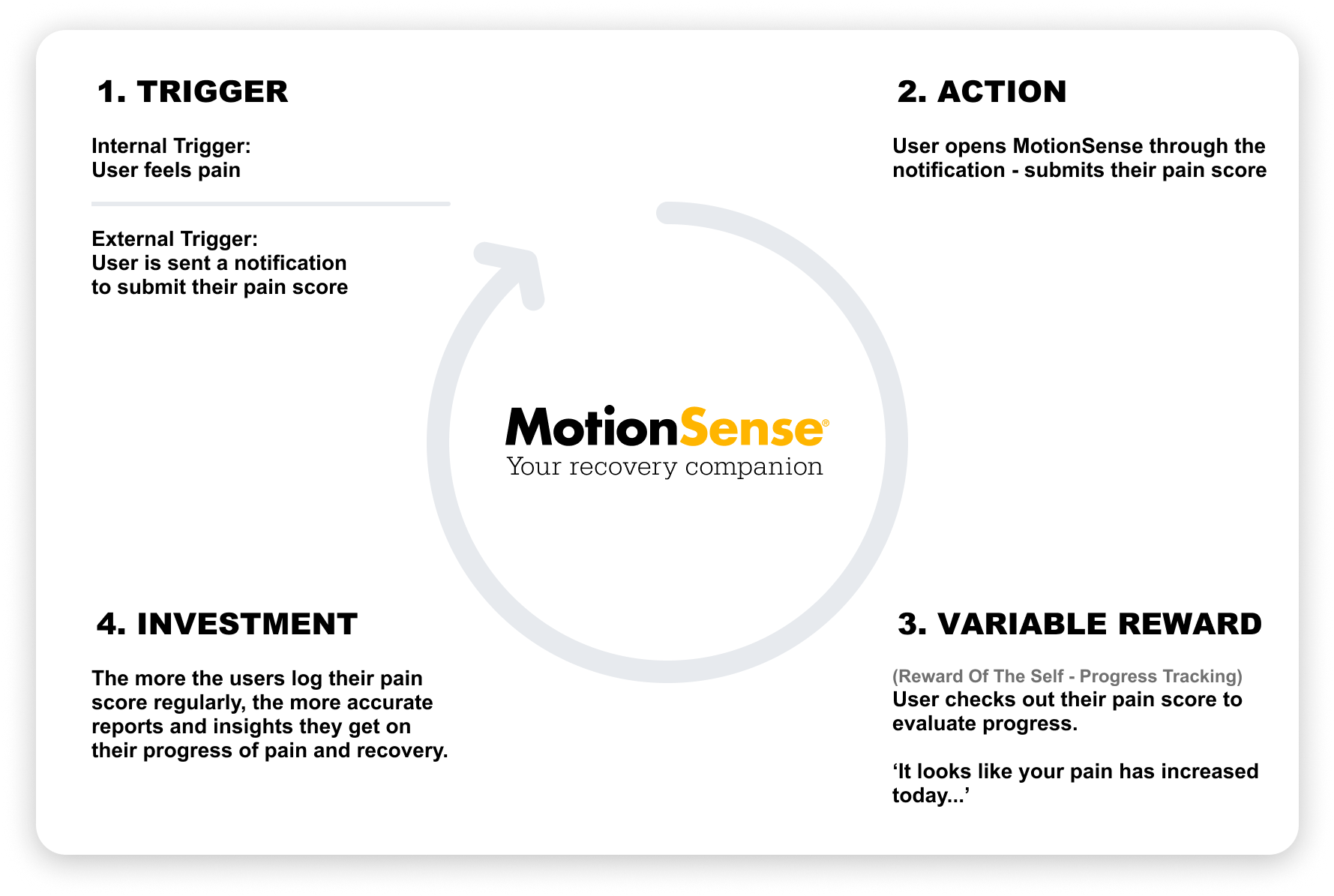
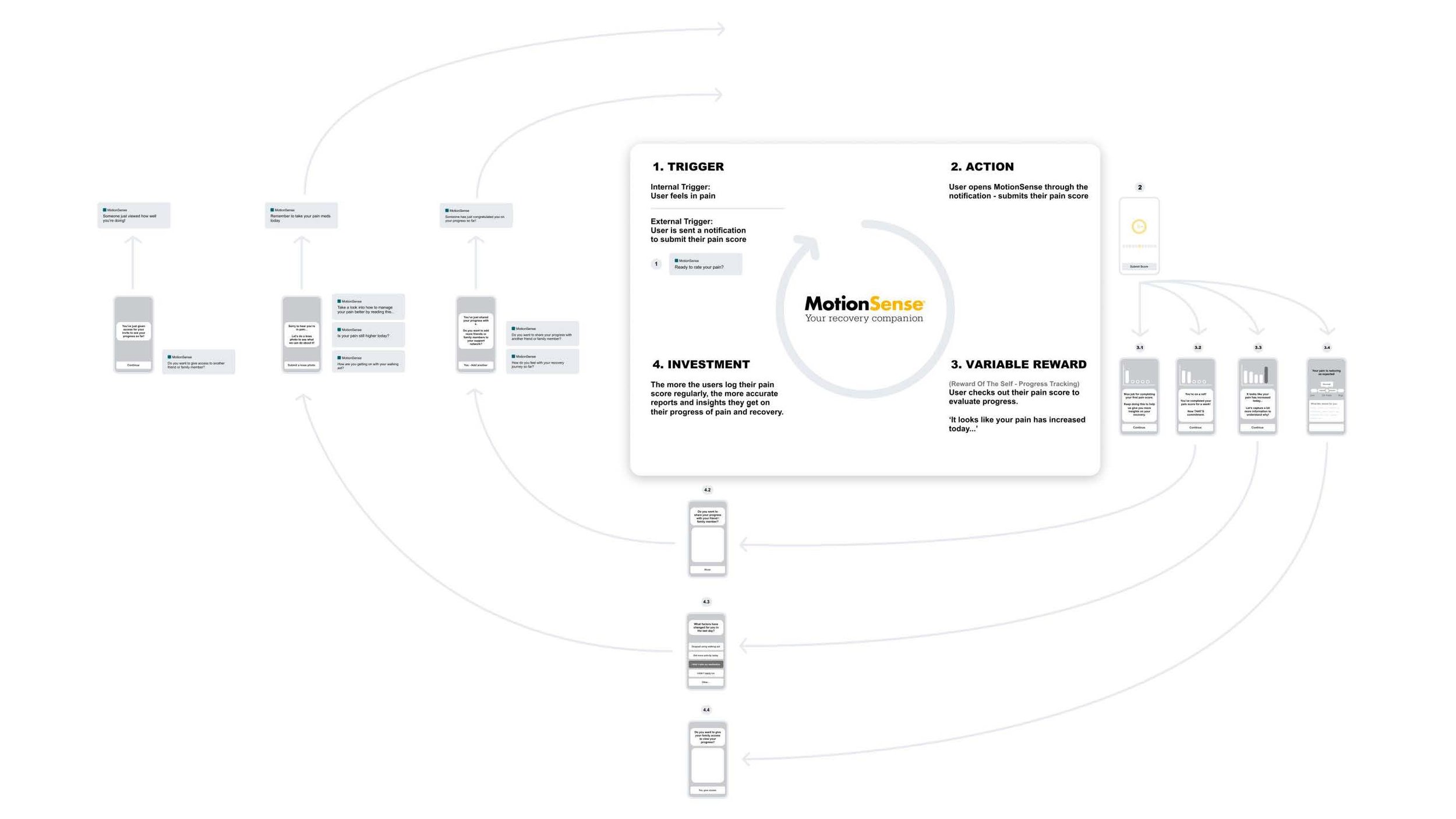
Outcome after exploring the Hooked Model: How MotionSense Captures User Engagement and Drives Habit Formation.